Project Co-Directors:
Elias Bradley is Education Programs Manager at the Emily Dickinson Museum. Bradley has led the growth of school programming, academic partnerships, and educator professional development for 8 years. Prior to working at the Emily Dickinson Museum, Elias was Senior Educator at the public garden and Cultural Center Wave Hill, leading interdisciplinary school programs connecting history, art, and the living environment. Elias has a BA in English and History from the University of Illinois, and MA in Public History from the University of Massachusetts Amherst.
Brooke Steinhauser is Senior Director of Programs at the Emily Dickinson Museum where she oversees interpretation, education, visitor experience, and public programming. She was a workshop assistant for the Museum’s 2009 Landmarks workshop, and project director for the Museum’s 2017 workshop. She holds a Bachelor’s degree from Muhlenberg College in Art History and a Master’s degree in Museum Studies from the Cooperstown Graduate Program.
Workshop Faculty:
Martha Ackmann taught in the Gender Studies Department at Mount Holyoke College for thirty years, including a popular seminar on Emily Dickinson in the poet’s house, now the Emily Dickinson Museum. She is a past president of the Emily Dickinson International Society and co-founder of Legacy: A Journal of American Women Writers. Her book, These Fevered Days: Ten Pivotal Moments in the Making of Emily Dickinson (W.W. Norton & Company, 2020), will be one of the assigned pre-reading texts for the Museum’s workshops. She has instructed teachers from across the country through programs including the New England Young Writers Conference and the National Endowment for the Humanities.
Renée Bergland is a literary critic and a historian of science who teaches in the Department of Humanities at Simmons University where she is Program Director of Literature and Writing. Her most recent publication is Natural Magic: Emily Dickinson, Charles Darwin, and the Dawn of Modern Science (Princeton University Press, 2024), which won the British Society for the History of Science’s 2025 Hughes Prize. She contributed an essay, “Dickinson Emergent: Natural Philosophy and the Postdisciplinary Manifold”, to the Oxford Handbook to Emily Dickinson (2022). Bergland is writing a forthcoming general audience book examining Dickinson’s poetry as interpreted through the lens of different sciences, including astronomy, 5 geology, and ecology. She is a member of the board of the Emily Dickinson International Society.
Lisa Brooks is the Winthrop H. Smith 1916 Professor of American Studies and English at Amherst College. As a writer, literary scholar and historian, she works at the crossroads of early American literature & history, geography and Indigenous studies. Her writing and teaching considers questions about how we see the spaces known as “New England” and “America” when we turn the prism of our perception to divergent angles. Indigenous methodologies, including a focus on language, place, and community engagement, are crucial to her research, as is deep archival investigation. She was a contributor to the Oxford Handbook of Emily Dickinson (Oxford University Press, 2022) with my essay entitled, “Whose Native Place? The Dickinsons and the Colonization of the Connecticut River Valley.”
Tiana Clark is the Grace Hazard Conkling Writer-in-Residence at Smith College. In addition to scholarships at Bread Loaf, Sewanee Writers’ Conference, the Frost Place Seminar, and Kenyon Review Writers Workshop, she is the winner of the 2020 Kate Tufts Discovery Award. She is a recipient of the 2021–22 Amy Lowell Poetry Traveling Scholarship, a 2019 Pushcart Prize, and is a 2019 National Endowment for the Arts Literature Fellow. As Smith College Writer-in-Residence she is a judge of the Annual Poetry Prize for High School Girls. Her book I Can’t Talk About the Trees Without the Blood won the 2017 Agnes Lynch Starrett Prize, and her 7 first book, Equilibrium (Bull City Press, 2016), was selected by Afaa Michael Weaver for the 2016 Frost Place Chapbook Competition. Clark’s essay “We keep revising our idea of Emily Dickinson. We may never get her right.” was published in the Washington Post in 2019 and she was a headliner of the Emily Dickinson Museum’s Tell It Slant Poetry Festival in 2021. Her latest book of poems, Scorched Earth, is a finalist for the 2025 National Book Award.
P. Gabrielle Foreman is the Paterno Family Professor of American Literature and Professor of African American Studies and History at Penn State. She is the co-founder and co-director of the Center for Black Digital Research at Penn State and is founding director of the Colored Convention Project. She is known for building collaborative teams that bring the records of seven decades of early Black organizing to digital life. With artistic director Lynnette Young Overby and poet Glennis Redmond, she has also worked for a decade to bring early Black history to the stage. In 2022, Foreman was awarded the MacArthur Fellowship.
Cristanne Miller is SUNY Distinguished Professor and Edward H. Butler Professor of Literature at University of Buffalo, emerita, where she publishes on nineteenth- and twentieth-century poetry and culture, including Emily Dickinson: A Poet's Grammar (Harvard University Press, 1987), Reading in Time: Emily Dickinson in the Nineteenth Century (Harvard University Press, 2012), an edition of Dickinson’s complete poems: Emily Dickinson’s Poems: As She Preserved Them (Harvard University Press, 2016), winner of the MLA Scholarly Edition Prize and translated into Portuguese; and The Letters of Emily Dickinson, co-edited with Domhnall Mitchell (Harvard University Press, 2024), named as a best 10 Books of the year by PBS News 3 Hour, NPR, and the London Review of Books. Miller co-edited the 2022 Oxford Handbook of Emily Dickinson with Karen Sánchez-Eppler. She serves on the advisory board of the Emily Dickinson Archive, and formerly on the board of the Emily Dickinson International Society.
Karen Sánchez-Eppler is L. Stanton Williams 1941 Professor of American Studies and English at Amherst College. The author of Touching Liberty: Abolition, Feminism and the Politics of the Body (1993) and Dependent States: The Child’s Part in Nineteenth-Century American Culture (2005), and co-editor with Cristanne Miller of The Oxford Handbook of Emily Dickinson (2022). She is currently writing a brief critical biography, Emily Dickinson / Critical Lives, for Reaktion Books and working on two other book projects: The Unpublished Republic: Manuscript Cultures of the Mid-Nineteenth Century US and In the Archives of Childhood: Playing with the Past. Her scholarship has been supported by grants from the NEH, ACLS, the Newberry Library, the Winterthur Library, the Stanford Humanities Center, and the Fulbright Foundation. She spent the 2019-20 academic year as Distinguished Scholar in Residence at the American Antiquarian Society, is one of the founding co-editors of The Journal of the History of Childhood and Youth, past President of C19: The Society of Nineteenth-Century Americanists, President of the Porter-Phelps-Huntington Foundation Board of Directors, and a longtime member of the Emily Dickinson Museum’s Board of Governors.
Jane Wald is the Jane and Robert Keiter Family Executive Director of the Emily Dickinson Museum. Before beginning her tenure at the Dickinson sites in 2001, she worked at Old Sturbridge Village in Sturbridge, Massachusetts. She has been responsible for several major restoration and documentation studies at the Museum and is the author of “‘Pretty much all real life’: The Material World of the Dickinson Family,” in the Blackwell Companion to Emily Dickinson (2008), “The ‘Poet Hunters’: Transforming Emily Dickinson’s Home into a Literary Destination,” in the Emily Dickinson Journal (2018), and “A Short Biography of the Homestead and The Evergreens” in the Oxford Handbook to Emily Dickinson (2022).
Learning Cohort Leaders:
Bruce Penniman taught writing, speech, and literature at Amherst Regional High School for 36 years, and served as the Site Director of the Western Massachusetts Writing Project at the University of Massachusetts, where he taught numerous graduate courses for teachers. He is the author of Building the English Classroom: Foundations, Support Success (NCTE: 2009). He served as a mentor teacher for the Emily Dickinson Museum’s NEH Landmarks workshops in 2009, 2011, 2013, and 2017, and has led many Emily Dickinson poetry discussion programs for the Museum.
Wendy Tronrud has a Masters in Teaching from Bard College and a PhD in Literature from CUNY Graduate Center, with a focus in 19th-century American and African American Literature, transhistorical poetry, archival studies, and pedagogy. She has taught at Queens College and Cooper Union, mentored and taught in Bard College’s Master of Teaching program, and been a faculty member for the Bard Prison Institute. She is an active member of the Emily Dickinson International Society and co-chair of the Society’s Pedagogy Committee.
Education Specialist/Learning Cohort Leader:
Deb Polansky has been a Program Supervisor and Field Instructor for Master of Arts in Teaching Students at Brandeis University, as well as a teacher trainer for NAMI (National Alliance on Mental Illness). Prior to her work in teacher education, she was a fourth-grade teacher at Shady Hill School for many years. She serves on the Emily Dickinson Museum Board of Directors and is an active member of the Emily Dickinson International Society.
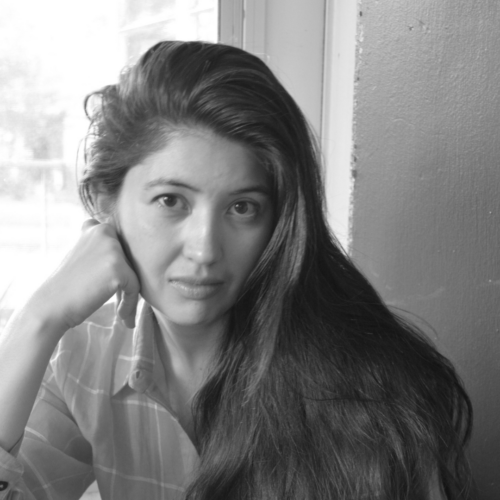
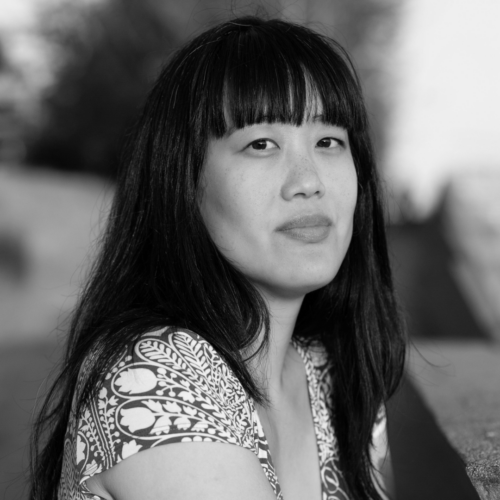 Esther Lin is an undocumented poet and the author of “Cold Thief Place” (Alice James Books, 2025), long-listed for the National Book Award, and “The Ghost Wife” (Poetry Society of America, 2018). A co-organizer of Undocupoets, Lin’s work has been supported by Cité Internationale, the Fine Arts Work Center in Provincetown, Stanford University, the Poetry Society of America, among others. She lives in Seattle.
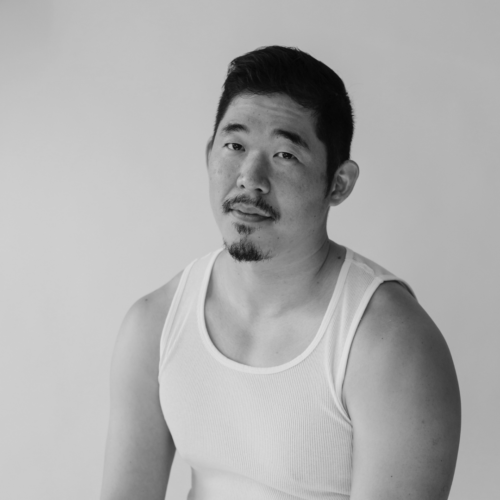 Jimin Seo was born in Seoul, Korea and immigrated to the US to join his family at the age of eight. He is the author of OSSIA, a winner of The Changes Book Prize judged by Louise Glück. His poems can be found in Action Fokus, The Canary, LitHub, Pleiades, mercury firs, and The Bronx Museum. His most recent projects were Poems of Consumption with H. Sinno at the Barbican Centre in London, and a site activation for salazarsequeromedina’s Open Pavilion at the 4th Seoul Biennale of Architecture and Urbanism.
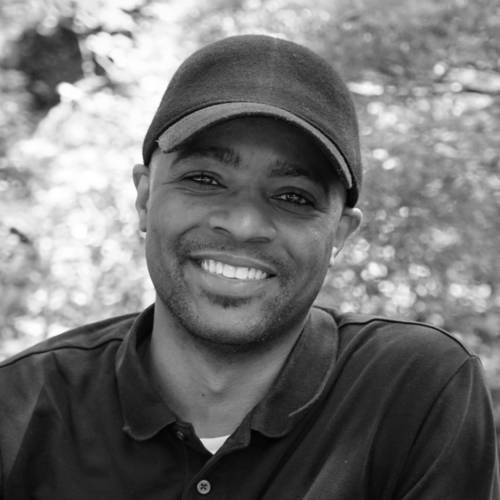
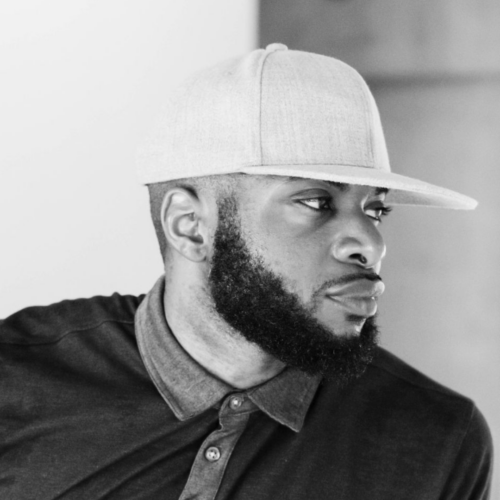 Oak Morse lives in Fort Lauderdale, Florida and holds an MFA from Warren Wilson College and an MLIS from the University of Southern Mississippi. He is the recipient of the 2025 Larry Levis Post-Graduate Award and the 2024 A Public Space Writing Fellowship. Oak has received support from PEN America and fellowships from Brooklyn Poets, Twelve Literary Arts, Cave Canem’s Starshine, and Clay, as well as a Stars in the Classroom honor from the Houston Texans. His work appears in POETRY, Callaloo, Electric Literature, Black Warrior Review, Obsidian, Painted Bride Quarterly, and Hobart, with work forthcoming in Rattle, among others.
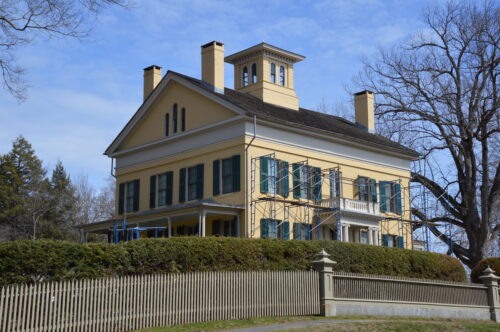
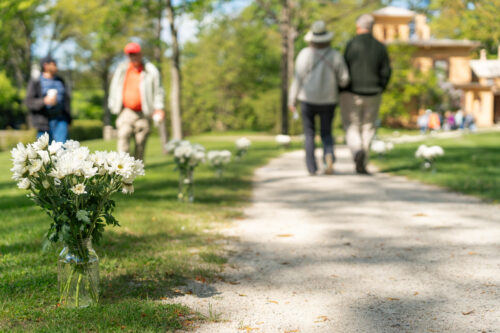
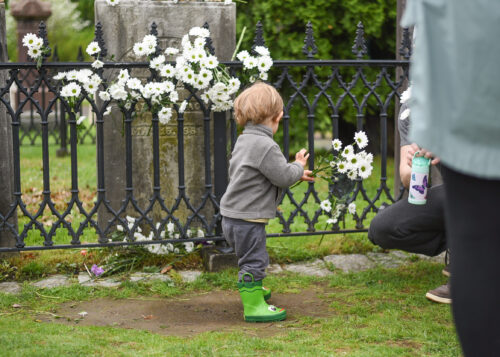 A Daisy for Dickinson




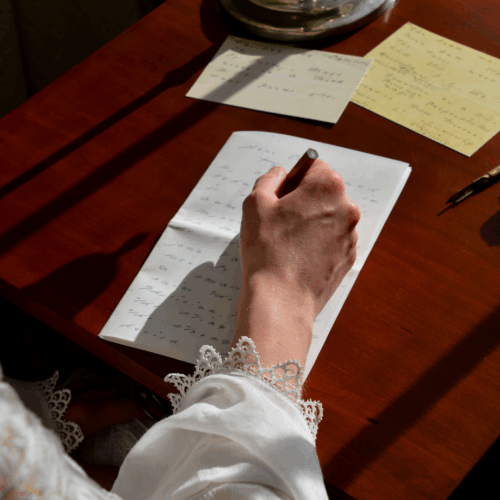
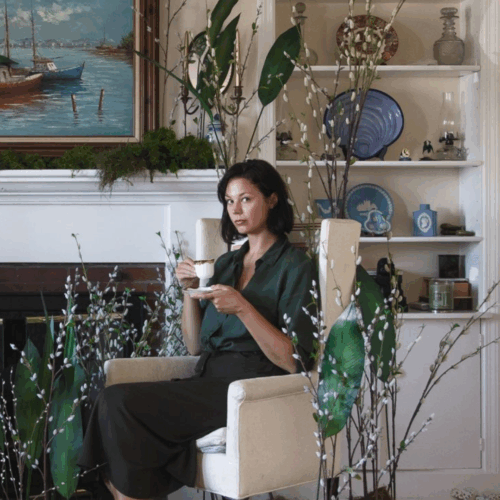 Adrien Broom is an award-winning photographer, set designer, and filmmaker based in NYC and Connecticut. Drawing upon her multidisciplinary background in animation, fine art, photography, and decorative arts, Broom creates intricate, handcrafted sets that transport viewers to fantastical realms, exploring the intersection of nature and fantasy. Broom meticulously constructs physical sets that invite viewers into tangible, imaginative worlds. Her practice spans gallery and museum exhibitions, commercial projects, private commissions, and conceptual portraiture—all unified by her consistent artistic vision and creative philosophy. Influenced by diverse artists from Gregory Crewdson and Jim Henson to John Singer Sargent and Shona Heath, Broom has developed a signature approach to creating extraordinary worlds both photographically and as installations. Her award-winning work has been exhibited at the Centro di Cultura Contemporanea (Florence), Hudson River Museum (Yonkers), Southern Vermont Arts Center, and Edward Hopper Museum (Nyack among others). In 2025, Broom will present solo exhibitions at the Fred Jones Jr. Museum of Art in Oklahoma and the Mark Twain Museum in Hartford, CT. Her touring exhibition, A Colorful Dream (2019-2026), exemplifies her commitment to inspiring wonder.
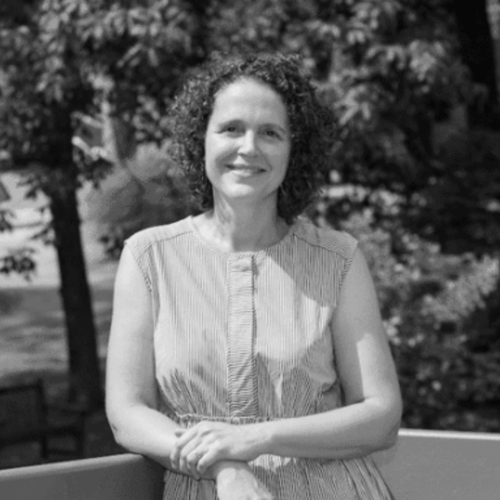 Ligia Bouton was born in Sao Paulo, Brazil, and currently divides her time between Massachusetts and New Mexico in the US. Her creative work combines sculpture and photography with performance and digital video to recreate appropriated narratives and research drawn from the history of science, literature, and other sources. Bouton’s recent projects have been shown at museums such as the Copenhagen Contemporary (Denmark), Crystal Bridges Museum of American Art, the National Museum of Women in the Arts, Guildhall Art Gallery (London, UK), Minneapolis Institute of Art, SITE Santa Fe, the New Mexico Museum of Art, the Philadelphia Art Alliance, Bellevue Arts Museum, the Minneapolis Institute of Art, and the Boulder Museum of Contemporary Art. In 2016, Bouton’s work was featured in the exhibition, “Charlotte Great and Small,” celebrating the bicentenary of Charlotte Brontë’s birth at the Brontë Parsonage Museum in Yorkshire, England. Bouton’s video work has been shown at Art Claims Impulse in Berlin, in the Biennial of Contemporary Art, Nimes, France, and at the Temporary Art Center, Eindhoven, The Netherlands, as well as in The Female Avant Garde Festival in Prague. Reviews of this work have appeared in Art in America, Art Papers, The Art Newspaper, Art Ltd., and The New York Times. She is the recipient of a 2016 Creative Capital grant for the opera “Inheritance” which premiered at University of California, San Diego in 2018 and a 2020 Smithsonian Artist Research Fellowship for her project “25 Stars: A Temporary Monument for Henrietta Swan Leavitt”. Her work can be found in numerous public and private collections including Crystal Bridges Museum, the Albuquerque Museum, St. John’s College, and the Falconer Gallery at Grinnell College. Bouton is currently Professor of Art Studio at Mount Holyoke College in South Hadley, Massachusetts.
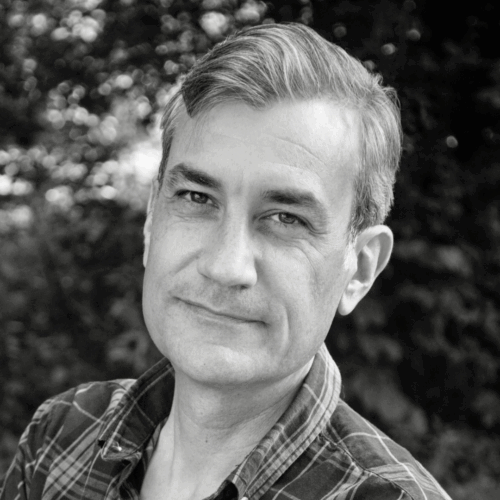 Matt Donovan is the author of four books and two chapbooks: We Are Not Where We Are (an erasure of Walden, co-authored with Jenny George, Bull City Press 2025), The Dug-Up Gun Museum (a collection of poems about guns and gun violence in America, BOA 2022), Missing Department (a collaborative collection of art and poetry created with artist Ligia Bouton, Visual Studies Workshop 2023), A Cloud of Unusual Size and Shape: Meditations on Ruin and Redemption (a book of lyric essays, Trinity University Press 2016), Rapture & the Big Bam (selected by Lia Purpura for the Snowbound Chapbook Competition, Tupelo Press 2016), and Vellum (selected by Mark Doty for the Bakeless Contest, Houghton Mifflin 2007). Donovan is the recipient of a Whiting Award, a Rome Prize in Literature, a Pushcart Prize, a Levis Reading Prize, and an NEA Fellowship in Literature. His work has appeared in numerous journals, including AGNI, American Poetry Review, The Believer, Kenyon Review, The New England Review, Poetry, Threepenny Review, and Virginia Quarterly Review. Donovan serves as Director of the Boutelle-Day Poetry Center at Smith College.