
The Emily Dickinson Museum is now accepting proposals for our 2026 programs: Phosphorescence Contemporary Poetry Series – a virtual event held monthly from April through September AND the 14th annual Tell It Slant Poetry Festival, held September 21 – 27! The Museum’s poetry programming features established and emerging poets who represent the diversity of the flourishing contemporary poetry scene and fosters community by placing poetry in the public sphere.
To submit for the Phosphorescence Contemporary Poetry Series and/or the Tell It Slant Poetry Festival, please click on the appropriate submission link and complete the free application process. All submissions must be received through SurveyMonkey Apply (via Amherst College) using the submission links provided below. Email or paper submissions will not be considered.
If you wish to submit multiple proposals, please complete a new application for each proposal. You may submit up to 2 submissions per program, and you may submit to both programs.
TIMELINE:
All proposals must be submitted by Sunday, February 15, 2026, 11:59pm ET.
Phosphorescence submissions will be notified of their acceptance status by April 2. Festival submissions will be notified of their acceptance status by May 1. Participating poets and presenters will be asked to sign a letter of agreement confirming participation on assigned dates.
Learn more about each program below.
About Phosphorescence
Produced by the Emily Dickinson Museum, the Phosphorescence Contemporary Poetry Series celebrates contemporary creativity that echoes Dickinson’s revolutionary poetic voice. The Series is a place to connect virtually over a shared love of poetry and an appreciation for Dickinson’s literary legacy. Groups of poets may read remotely from the location of their choice or travel to the Emily Dickinson Museum in Amherst, MA, to have their reading live-streamed to a virtual audience. Poets will indicate their preference for reading location on their submission form.
Featured poets are promoted on the Museum’s event web page, through a mailing list of over 32,000 addresses, and through the Museum’s social media. Each participating poet receives a $200 honorarium. There is no fee to submit proposals.
View last year’s Phosphorescence lineup
Watch past Phosphorescence readings on YouTube
READINGS: Readings will take place on Thursdays at 6PM ET on the following dates: April 23, May 21, June 18, July 16, August 20, and September 24. This year, the Museum invites submissions from groups of 2-3 poets who plan to read together if selected. Solo submissions will not be considered. Readings are 15 minutes long on average per reader. Poets are welcome to promote sales of their books and awareness of other media during the program. (The Museum does not sell books for this series.) Poets should be prepared to engage in a facilitated conversation after their readings.
The following submission qualities are especially encouraged:
- Builds community
- Features BIPOC and/or LBGTQ+ voices
- Highlights a connection to Dickinson’s life and legacy
- Pushes poetic boundaries
Only complete submissions made through the SurveyMonkey Apply (via Amherst College) platform linked above will be considered. (You may be prompted to create a free account if you do not already have one.)
SUBMISSION DEADLINE: Sunday, February 15, 2026, 11:59pm ET.
Please direct questions about submissions to EDMprograms@EmilyDickinsonMuseum.org
About the Tell It Slant Poetry Festival
Produced by the Emily Dickinson Museum, the Tell It Slant Poetry Festival celebrates the poetic legacy of Emily Dickinson and the contemporary creativity she continues to inspire from the place she called home. The Festival’s name, “Tell It Slant,” pays homage to Dickinson’s poem, “Tell all the truth but tell it slant.” This title underscores the revolutionary power of poetry to shift our perspective and reveal new truths.
The Festival is a hybrid event, with programs happening in-person at the Museum and online, for both in-person and virtual audiences throughout the week of September 21 -27. We invite you to “dwell in possibility” and submit your most inventive proposals for in-person or virtual, generative workshops and panels! Submissions for virtual programs should be for live, synchronous content only. Honoraria of $350 are provided per event. There is no fee to submit proposals.
View last year’s Festival schedule
The Festival organizers especially welcomes the following submission qualities:
- From groups of 2 – 4 facilitators
- Generative writing programs
- Creatively encourage audience participation or foster a strong sense of community
- Engage young attendees and/or those new to poetry
- Ensure people with a range of abilities can participate meaningfully
Organizers are seeking submissions for the following program types:
IN-PERSON OR VIRTUAL WORKSHOPS:
- Public poetry workshops are typically 90-minutes long.
- Workshops must be interactive and generative, centering around skill-building activities.
- Virtual workshops must be adaptable for large virtual audiences of around 200.
IN-PERSON OR VIRTUAL PANELS:
- Public poetry panels are typically 90-minutes long.
- Panels must consist of at least three people, including a facilitator.
- Panels should foster a strong sense of community and include moments for audience participation. They may include short readings by panel members.
- Virtual panels will be recorded and live-streamed to large virtual audiences of around 200.
Only complete submissions made through the SurveyMonkey Apply (via Amherst College) platform linked above will be considered. (You may be prompted to create a free account if you do not already have one.)
SUBMISSION DEADLINE: Sunday, February 15, 2026, 11:59pm ET.
Phosphorescence submissions will be notified of their acceptance status by April 2. Festival submissions will be notified of their acceptance status by May 1. Participating poets and presenters will be asked to sign a letter of agreement confirming participation on assigned dates.
Please direct questions about submissions to EDMprograms@EmilyDickinsonMuseum.org



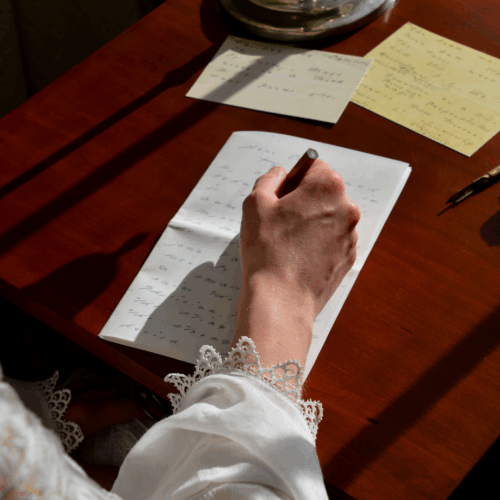
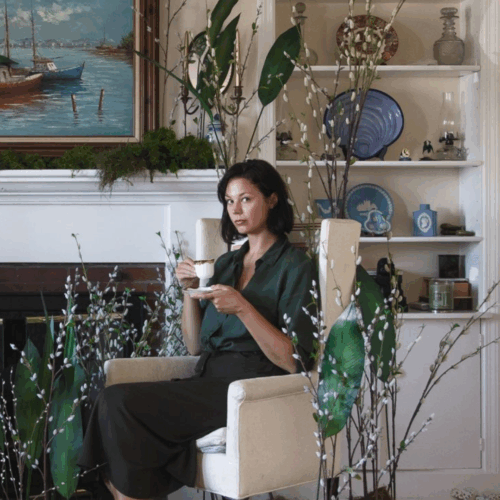 Adrien Broom is an award-winning photographer, set designer, and filmmaker based in NYC and Connecticut. Drawing upon her multidisciplinary background in animation, fine art, photography, and decorative arts, Broom creates intricate, handcrafted sets that transport viewers to fantastical realms, exploring the intersection of nature and fantasy. Broom meticulously constructs physical sets that invite viewers into tangible, imaginative worlds. Her practice spans gallery and museum exhibitions, commercial projects, private commissions, and conceptual portraiture—all unified by her consistent artistic vision and creative philosophy. Influenced by diverse artists from Gregory Crewdson and Jim Henson to John Singer Sargent and Shona Heath, Broom has developed a signature approach to creating extraordinary worlds both photographically and as installations. Her award-winning work has been exhibited at the Centro di Cultura Contemporanea (Florence), Hudson River Museum (Yonkers), Southern Vermont Arts Center, and Edward Hopper Museum (Nyack among others). In 2025, Broom will present solo exhibitions at the Fred Jones Jr. Museum of Art in Oklahoma and the Mark Twain Museum in Hartford, CT. Her touring exhibition, A Colorful Dream (2019-2026), exemplifies her commitment to inspiring wonder.
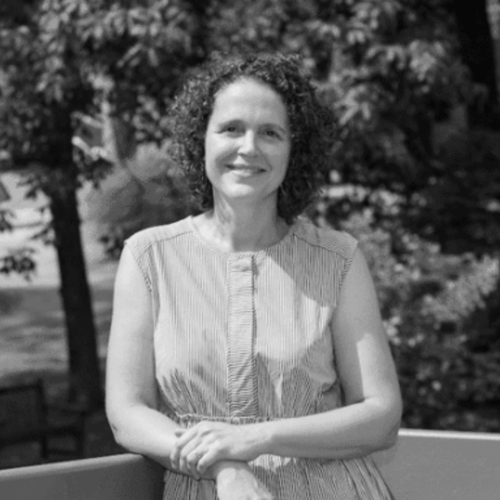 Ligia Bouton was born in Sao Paulo, Brazil, and currently divides her time between Massachusetts and New Mexico in the US. Her creative work combines sculpture and photography with performance and digital video to recreate appropriated narratives and research drawn from the history of science, literature, and other sources. Bouton’s recent projects have been shown at museums such as the Copenhagen Contemporary (Denmark), Crystal Bridges Museum of American Art, the National Museum of Women in the Arts, Guildhall Art Gallery (London, UK), Minneapolis Institute of Art, SITE Santa Fe, the New Mexico Museum of Art, the Philadelphia Art Alliance, Bellevue Arts Museum, the Minneapolis Institute of Art, and the Boulder Museum of Contemporary Art. In 2016, Bouton’s work was featured in the exhibition, “Charlotte Great and Small,” celebrating the bicentenary of Charlotte Brontë’s birth at the Brontë Parsonage Museum in Yorkshire, England. Bouton’s video work has been shown at Art Claims Impulse in Berlin, in the Biennial of Contemporary Art, Nimes, France, and at the Temporary Art Center, Eindhoven, The Netherlands, as well as in The Female Avant Garde Festival in Prague. Reviews of this work have appeared in Art in America, Art Papers, The Art Newspaper, Art Ltd., and The New York Times. She is the recipient of a 2016 Creative Capital grant for the opera “Inheritance” which premiered at University of California, San Diego in 2018 and a 2020 Smithsonian Artist Research Fellowship for her project “25 Stars: A Temporary Monument for Henrietta Swan Leavitt”. Her work can be found in numerous public and private collections including Crystal Bridges Museum, the Albuquerque Museum, St. John’s College, and the Falconer Gallery at Grinnell College. Bouton is currently Professor of Art Studio at Mount Holyoke College in South Hadley, Massachusetts.
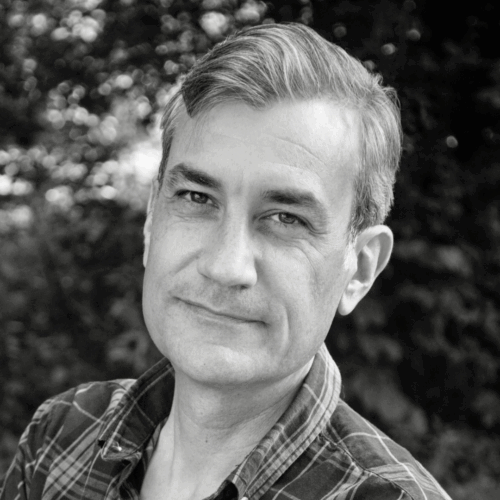 Matt Donovan is the author of four books and two chapbooks: We Are Not Where We Are (an erasure of Walden, co-authored with Jenny George, Bull City Press 2025), The Dug-Up Gun Museum (a collection of poems about guns and gun violence in America, BOA 2022), Missing Department (a collaborative collection of art and poetry created with artist Ligia Bouton, Visual Studies Workshop 2023), A Cloud of Unusual Size and Shape: Meditations on Ruin and Redemption (a book of lyric essays, Trinity University Press 2016), Rapture & the Big Bam (selected by Lia Purpura for the Snowbound Chapbook Competition, Tupelo Press 2016), and Vellum (selected by Mark Doty for the Bakeless Contest, Houghton Mifflin 2007). Donovan is the recipient of a Whiting Award, a Rome Prize in Literature, a Pushcart Prize, a Levis Reading Prize, and an NEA Fellowship in Literature. His work has appeared in numerous journals, including AGNI, American Poetry Review, The Believer, Kenyon Review, The New England Review, Poetry, Threepenny Review, and Virginia Quarterly Review. Donovan serves as Director of the Boutelle-Day Poetry Center at Smith College.
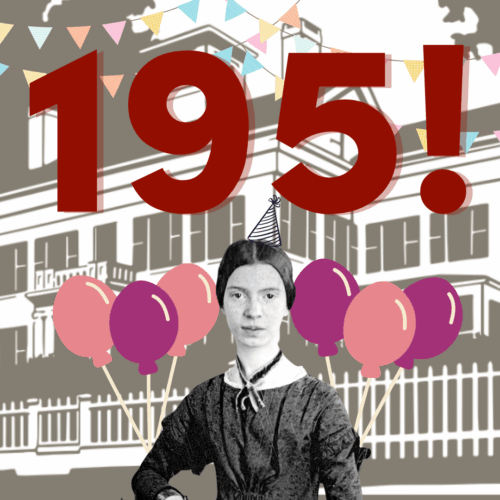 You are cordially invited to the Emily Dickinson Museum’s celebration of the poet’s 195th birthday! On Saturday, December 6, join us in person at the Homestead and The Evergreens for a free open house with tours, crafts, music, hot cider and gingerbread cookies!

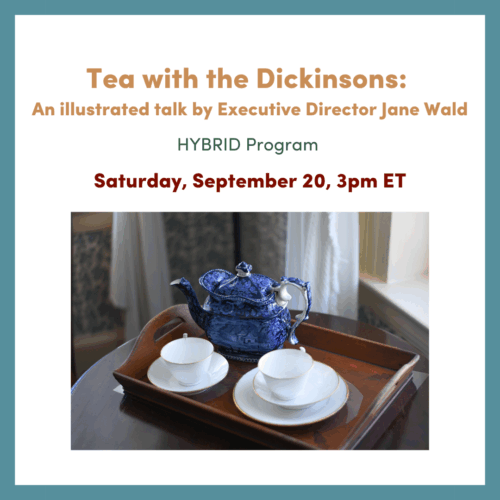 Introduced to the European market in the seventeenth-century, trade in tea – and subsequently in coffee and chocolate – became a means of establishing empires and generating the almost frantic consumerism of the eighteenth and nineteenth centuries in the West. Emily Dickinson and her family delighted in these exotic imported beverages and, like the rest of New England, acquired the requisite material goods to make and serve tea, coffee, and chocolate in their own family circle and for their guests. This talk will explore the meanings, settings, and equipment for “taking tea” in Emily Dickinson’s world, including original family objects now in the Museum’s collection.
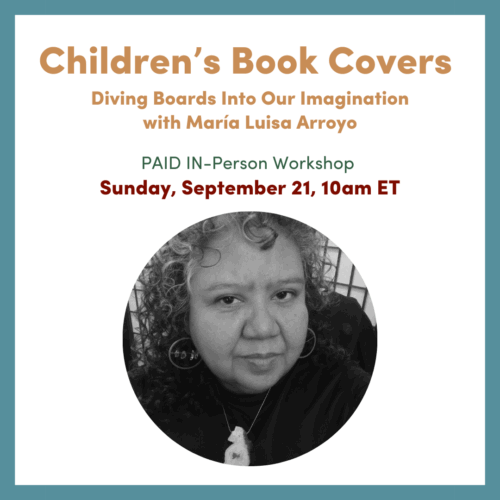 Beginner and experienced poets of all ages are invited to come and use children’s book covers as diving boards into memory and imagination. Children’s books will be on hand to browse, and participants will also be encouraged to search online for their own current or past favorite children’s books. Using one or more of the five senses (sight, sound, touch, smell & taste), participants will generate drafts of new poems as the vivid literary landscape of rhymes, illustration, and stories of childhood spark memories and new ideas.