
honeybees on white asters

Virtual Poetry Discussion Group
April 16 & April 20

The Emily Dickinson Museum’s Poetry Discussion Group meets monthly, September through May, for lively conversation about Emily Dickinson’s poetry and letters.

Join us on Friday, April 16 from 12pm to 1:30pm EST or Tuesday, April 20, from 6pm to 7:30pm EST on Zoom. Space is limited, and registration for this program is now closed.

This program is free of charge, but we encourage those who are able to do so to make a donation after the program.

Topic: “We – Bee and I – live by the quaffing –”: Exploring Emily Dickinson’s Bees
Bees were incredibly popular figures in nineteenth-century American poetry: Emerson’s “The Humble-Bee” is one celebrated example, but bees also play prominent roles in poems by Henry David Thoreau, Edgar Allan Poe, John Greenleaf Whittier, Priscilla Jane Thompson, among many others. What distinguishes Emily Dickinson from these other poets is the breadth of her representations of bees. Dickinson’s use of bees lends itself to discussion of a remarkably rich array of themes: gender and sexuality, class and race, scientific and ecological discourse, religion, and aesthetics (and no doubt many more). Reflecting on this symbolic density, our discussion will chart points of congruity and incongruity between Dickinson’s changeable bees. 

About the Facilitator
Claire Nashar is a scholar, translator, editor, and poet. She earned her Ph.D. from the University of Buffalo (SUNY), supported by a Mellon/ACLS Dissertation Completion Fellowship. Winner of an Excellence in Teaching Award, she has published two books of poems, Lake (2016) and Handmade (2015) and a number of interviews, translations, poems, and critical essays. She edited a special issue of Formes Poétiques Contemporaines and is at work on a book-length translation of Louis Aragon’s Le Fou d’Elsa (1963). Nashar served as curator of the online Australian Poetry Library and as Assistant Project Editor and Manager for the Marianne Moore Digital Archive.

Questions? write edmprograms@emilydickinsonmuseum.org
Homestead piano and sheet music

Virtual Poetry Discussion Group
March 19 & 26

The Emily Dickinson Museum’s Poetry Discussion Group meets monthly, September through May, for lively conversation about Emily Dickinson’s poetry and letters.

Join us from 12pm to 1:30pm on Zoom for a discussion on March 19 or March 26. Space is limited. Please submit a registration request via this google form.

This program is free of charge, but we encourage those who are able to do so to make a donation after the program.

Topic: Yankee Doodle Variations: Emily Dickinson and Improvisation

The basic facts of Emily Dickinson’s known musical life have been well documented. She was said, at age 2 1/2, to enjoy playing “the moosic” on her aunt Lavinia’s piano. As a child, she took singing lessons, and later sang alongside other students at Mount Holyoke Female Seminary, where she also likely heard the Hutchinson Family Singers perform. In her twenties, she wrote of hearing the internationally famous soprano Jenny Lind, collected dozens of pieces of sheet music, and earned a reputation as a striking improviser at the piano. In fact, the Hutchinsons and Lind, among other performers Dickinson heard, were also widely recognized for their improvisations. 

Dickinson’s musical knowledge informed the writing of her poems. Judy Jo Small and other critics have noted that many poems follow familiar patterns of hymns, nursery rhymes, and ballads. Dickinson also wrote about music in letters and poems, demonstrating a nuanced grasp of musical principles. Finally, her poems’ formal qualities demonstrate the influence of improvisational performance practice. Those she kept for herself, in private, contain alternate words and markings, something like the annotated scores of a performing musician. Those she sent to friends and family were customized, often making use of these variants but seldom containing variants themselves. These function something like the extemporaneous piano performances for which she was known. 

To set the stage for this discussion, I will begin by presenting some foundational information about Dickinson’s musical life and interests, including how people of her time experienced and thought about improvisation and spontaneity more generally, both in music and in writing. Then we will discuss several poems – and perhaps a letter or two – that touch on music in social and natural settings. We will close by discussing a poem across several extant manuscripts, as an example of improvised poetic performance.

About the Facilitator
Gerard Holmes
completed a PhD in English Literature in 2020, at the University of Maryland, College Park, with a dissertation titled “‘Discretion in the Interval’: Emily Dickinson’s Musical Performances.” He has published in The Emily Dickinson JournalReception, and Women’s Studies, a special themed issue, “New Directions in Dickinson and Music,” which he also co-edited. He contributed a chapter to the forthcoming Oxford Handbook to Emily Dickinson.

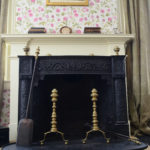
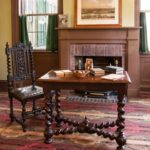
Fireplace in Emily Dickinson's bedroom

Virtual Poetry Discussion Group, February 19 & 24

The Emily Dickinson Museum’s Poetry Discussion Group meets monthly, September through May, for lively conversation about Emily Dickinson’s poetry and letters.

Join us from 12pm to 1:30pm on Zoom for a discussion on February 19 or February 24. Space is this program is no longer available. For questions, please write edmprograms@emilydickinsonmuseum.org.

This program is free of charge, but we encourage those who are able to do so to make a donation after the program.

Topic: “Emily Dickinson’s Hearths and Homes”
  Emily Dickinson’s experience of the family hearth and home became her metaphor for the transformation of thought into poetry.  Six poems about homes and hearths show how Dickinson used these images, how they evolved over time, and, time permitting, how they contrasted with other writers’ images of the family hearth.  

About the Facilitator
Melba Jensen has taught English, computer literacy, and mathematics to college students and high-school students since 1986. She completed her Ph.D. in English with an emphasis in nineteenth-century American Literature at the University of Massachusetts in 2005. She is a lecturer in American Literature at UMass-Amherst, and a guide at the Emily Dickinson Museum.

a row of Dickinson's textbooks on a shelf

“A Mighty Room” Virtual Studio Session: Library
Thursday, March 4, 12-1pm

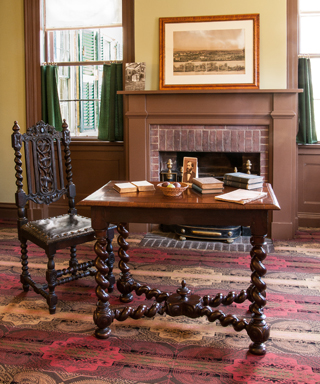
the inside of the homestead library

The Homestead Library

Sweet hours have perished here;

This is a mighty room;

Within its precincts hopes have played, —

Now shadows in the tomb.  

-J1767 

Spend a “sweet hour” in Emily Dickinson’s creative space where she penned her startling poetry. Whether you are a writer, an artist, a composer, or a poet, you’ll find solace and inspiration for your artistic output in Emily Dickinson’s library. Let this quiet virtual experience jumpstart your next creative journey. 

What to expect: As one of a limited number of participants, you will need to find a quiet spot with a good internet connection from which to be immersed in a live feed from the library of Emily Dickinson’s Homestead. Plan to have your camera and audio on. In this room were gathered Dickinson’s favorite books, her “Kinsmen of the Shelves” that “carried her to lands away.” A facilitator in the room welcomes you and gently guides you through three inspirational writing prompts to help you explore this unique physical and psychic space and unleash your own creativity over the course of the hour. Focused on reflection and quietude, this program is not a writing workshop, but you will have the opportunity at the end for a short share-out with the group if you wish. 

Space is limited for this program.  Please request a space using our registration form.

This program is free to participate, but your donation helps the Museum to continue providing free programs! Participants will be invited to make an online donation after the program.

Questions? write edmprograms@emilydickinsonmuseum.org. 

poetry discussion group

Virtual Poetry Discussion Group, January 15 & 22

The Emily Dickinson Museum’s Poetry Discussion Group meets monthly, September through May, for lively conversation about Emily Dickinson’s poetry and letters.


Join us from 1pm to 2:30pm on Zoom for a discussion on January 15 or January 22. Space is limited. To request a space, please complete this google form. For questions, please write edmprograms@emilydickinsonmuseum.org.

This program is free of charge, but we encourage those who are able to do so to make a donation after the program.

Topic: Title: “Nerve in Marble: the Geology of Emily Dickinson’s Poetry”   
Amanda Lowe’s work on Emily Dickinson interprets the processes of geothermal activity and rock metamorphosis as central to Dickinson’s poetic forms. This discussion invites participants to explore a collection of Dickinson’s poems that use images of volcanoes, granite and marble to explore the effects of human emotion on the body. We’ll discuss the development of geologic inquiry during the nineteenth century, Dickinson’s education in it, and suggest ways these theories seeped into her poetry. Through speakers’ depictions of highly alive and dead bodies, we’ll look together at the profound impact geology had on Dickinson’s understanding of the human relationship to the natural world.

About the Facilitator
Amanda Lowe is a PhD Candidate at Columbia University who researches the presence of geologic theory in nineteenth century American Literature. She is a current SOF/Heyman Center Public Humanities Fellow and the Graduate Student Coordinator for the Freedom and Citizenship Program. 

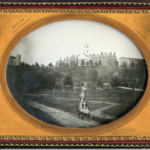
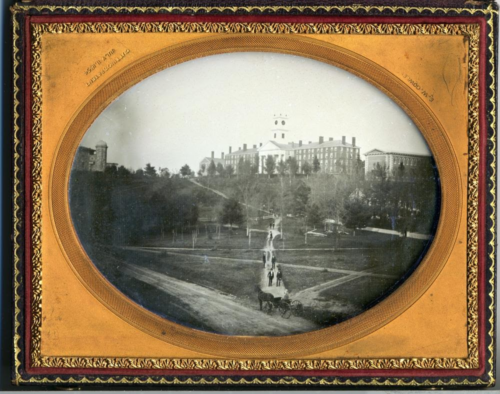
daguerreotype in gilt frame of Amherst College

Emily Dickinson’s Amherst College, December 4, 12-1:15pm

daguerreotype in gilt frame of Amherst College

Amherst College circa 1855. Half plate ambrotype by E.W. Cowles, courtesy of Amherst College Archives and Special Collections.


Join Museum staff for a lively lunchtime talk about the impact of Amherst College on the life of poet Emily Dickinson. 

The Dickinson family were instrumental to the College during its first 75 years, beginning with Samuel Fowler Dickinson’s part in its founding and continuing with Edward and Austin’s combined 60 years of service as treasurers. The College was an early and lasting influence in Dickinson’s own life, playing an inestimable role in her early education & friendships, and later connecting her to an ever-widening local and global community. Through original photographs and archival documents, encounter some of the people and places that defined Dickinson’s 19th century Amherst College, including students, professors, workers, and alumni. 

Following the talk, enjoy the Q&A with museum guides Stephanie Bennett, Brenna Macaray, Dr. Christopher Fobare, and Anna Plummer.


All are welcome to attend this free program, but registration is required. Register in advance via zoom. 
Questions? Please write edmprograms@emilydickinsonmuseum.org. 

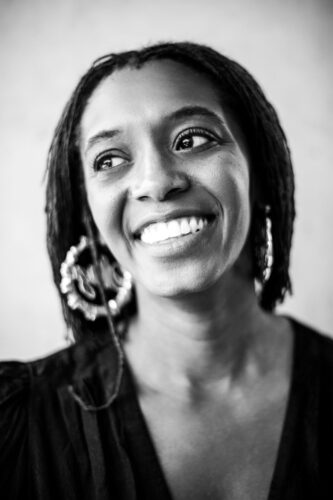
grayscale headshot of shayla lawson

Shayla Lawson
October 13, 7pm

Join poet Shayla Lawson as she reads from her new essay collection This is Major: Notes on Diana Ross, Dark Girls, and Being Dope, which has been called “a hilarious, heartbreaking, and endlessly entertaining homage to black women’s resilience and excellence” (Kirkus Reviews). A Q&A with Lawson follows the reading. This event kicks off the Amherst College Creative Writing Fall Reading Series

Please click here to register for this free program.

grayscale headshot of shayla lawsonAbout the poet: Shayla Lawson is the author of three books of poetry—A Speed Education in Human Being, the chapbook Pantone, and I Think I’m Ready to see Frank Ocean—and the essay collection This Is Major: Notes on Diana Ross, Dark Girls, and Being Dope, which Kirkus called “A hilarious, heartbreaking, and endlessly entertaining homage to black women’s resilience and excellence.” She was born in Rochester, Minnesota, grew up in Lexington, Kentucky, studied architecture in Italy, and spent a few years as a Dutch housewife—milkmaid braids and all. She teaches at Amherst College and lives in Brooklyn, NY.
 

2020 Tell It Slant Schedule

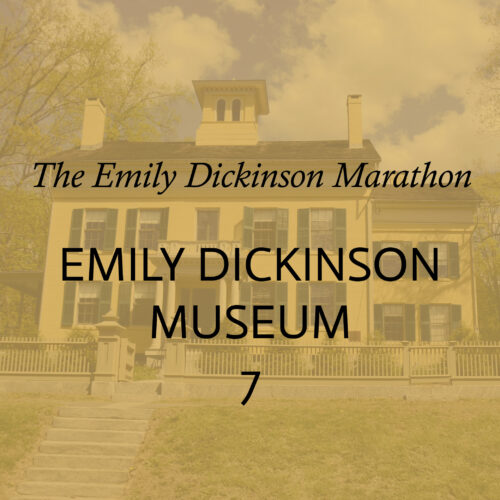
the words The Emily Dickinson Marathon Emily Dickinson Museum 7 in black on a yellow-tinted image of the Homestead

Emily Dickinson Marathon
Part 7: The Emily Dickinson Museum

September 20, 3-5pm

Virtual Program

the words The Emily Dickinson Marathon Emily Dickinson Museum 7 in black on a yellow-tinted image of the Homestead

Join us for the final segment of the week-long Emily Dickinson Marathon! An Emily Dickinson Museum tradition, the Marathon is a group reading of all 1,789 poems by Emily Dickinson over the course of about 14 hours. For this year’s remote Festival, we are partnering with six other organizations to host the Marathon in two-hour sessions each day of this week. For the marathon, we will be reading from Ralph Franklin’s The Poems of Emily Dickinson: Reading Edition.

The culminating session of the Marathon will be hosted by the Emily Dickinson Museum, organizers and producers of the Tell It Slant Poetry Festival. 

In this session we will read poems numbered 1414-1685 in the Franklin. Text of the poems will be screen-shared for those who do not have their own poetry editions.

This program will be livestreamed to the Emily Dickinson Museum’s Facebook page and available to viewers there during and after the program.

Support The Tell It Slant Poetry Festival and Honor Someone Special:
Admission to all Festival events is free, but online donations, especially those made in honor or memory of family, friends, or colleagues are heartily encouraged and vital to the future of this beloved annual event. All gifts are tax deductible and will be recognized as part of the Festival.

2020 Tell It Slant Schedule

the inside of the homestead library

“A Mighty Room” Studio Session: Library
September 20, 11:30am-12:30pm

Virtual Program
the inside of the homestead library

photo by Jeff Morgan

Sweet hours have perished here;

This is a mighty room;

Within its precincts hopes have played, —

Now shadows in the tomb.  

-J1767 

Spend a “sweet hour” in Emily Dickinson’s creative space where she penned her startling poetry. Whether you are a writer, an artist, a composer, or a poet, you’ll find solace and inspiration for your artistic output in Emily Dickinson’s library. Let this quiet virtual experience jumpstart your next creative journey. 


What to expect: As one of a limited number of participants, you will need to find a quiet spot with a good internet connection from which to be immersed in a live feed from the library of Emily Dickinson’s Homestead. In this room were gathered Dickinson’s favorite books, her “Kinsmen of the Shelves” that “carried her to lands away.” A facilitator in the room gently welcomes you and guides you through three inspirational prompts to help you explore this unique physical and psychic space and unleash your own creativity over the course of the hour. No share-outs will occur in this session, but participants may choose to share materials with the group after the program if desired.

Space is limited for this program. This program is full. 

Support The Tell It Slant Poetry Festival and Honor Someone Special:
Admission to all Festival events is free, but online donations, especially those made in honor or memory of family, friends, or colleagues are heartily encouraged and vital to the future of this beloved annual event. All gifts are tax deductible and will be recognized as part of the Festival.

2020 Tell It Slant Schedule

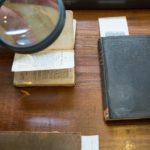
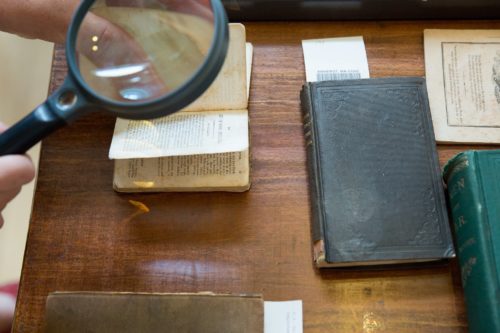
Closeup of a hand holding a magnifying glass over antique books.

Behind the Scenes with Emily Dickinson at the Jones Library’s Special Collections
September 20, 9-10:15am

Closeup of a hand holding a magnifying glass over antique books.

Join us for a very special behind the scenes look at the holdings of the Jones Library’s Special Collections in Amherst, Massachusetts. Head of Special Collections, Cyndi Harbeson, gives you an up close and personal look at a unique Dickinson collection that places the poet within her nineteenth-century Amherst context. The holdings include approximately 7,000 items, including original manuscript poems and letters, Dickinson editions and translations, and family correspondence. Hear the stories these objects can tell and learn about recent work and acquisitions to the collection. A Q&A follows the presentation. To learn more about the Jones Library and this collection visit: https://www.joneslibrary.org/316/Dickinson-Emily#background

About the facilitator: Cyndi Harbeson has wanted to be a librarian ever since she was a kid keeping her mother company in the Newington Public Library in Connecticut where her mother worked. But she also loved history – she has a master’s of arts in History and a master’s of science in library science with an archives concentration. When undergraduate at Simmons, she realized she could marry her two passions. Harbeson was a processing archivist at Appalachian State University in Boone, North Carolina before becoming Head of Special Collections at the Jones Library. She loves New England history, including Emily Dickinson, and visited the Homestead as a child.