
“My letter as a bee, goes laden“:
VIRTUAL PROGRAM
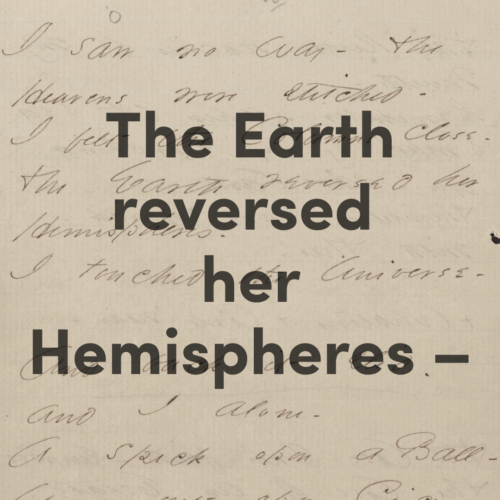
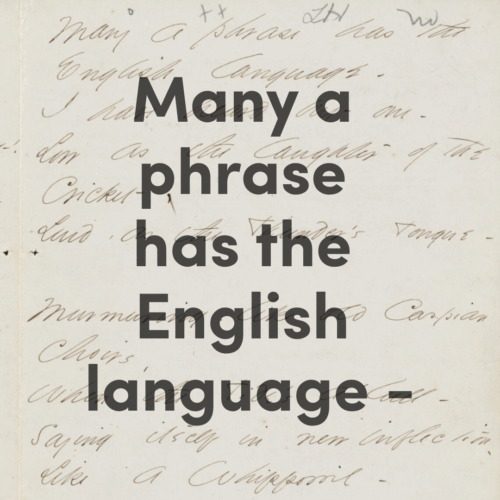
Join us for a virtual professional development program for educators exploring Dickinson’s manuscripts. This participatory zoom workshop will provide context and exercises that illuminate Dickinson’s frequently cryptic poetry. Attendees will leave this 90-minute session with new teaching strategies.
Registration is required and is offered on a sliding scale from $5 – $20. Please select the ticket price that is right for you and consider supporting the Museum and the participation of other educators through your purchase. Tickets are non-refundable.
You may request a Professional Development certificate upon registration.
View the full educator workshop lineup.
For any questions, please e-mail edmprograms@emilydickinsonmuseum.org
Join Cristanne Miller, co-editor of The Letters of Emily Dickinson (2022), for a presentation and workshop on teaching with the poet’s letters. Over 1,000 of Dickinson’s letters have been collected–the earliest sent to her brother Austin at the age of 11 and the last written shortly before her death. This new definitive edition–the first in over 60 years–includes almost 300 previously uncollected letters and more than 200 “letter poems.” Each is newly transcribed, revealing some previous transcription errors and uncovering deliberately omitted material.
The resulting collection paints a portrait of Dickinson as witty, engaging, and deeply connected with her community as well as the literature and events of her day. The letters provide meaningful context to her poems and can also stand alone as rich primary sources. This workshop will begin with an overview of the letters and Q&A with Miller, followed by interactive activities and discussion of select letters with Museum staff.
Cristanne Miller is SUNY Distinguished Professor and Edward H. Butler Professor of Literature at University of Buffalo, emerita, where she publishes on nineteenth- and twentieth-century poetry and culture, including Emily Dickinson: A Poet’s Grammar (Harvard University Press, 1987), Reading in Time: Emily DIckinson in the Nineteenth Century (Harvard University Press, 2012), an edition of Dickinson’s complete poems: Emily Dickinson’s Poems: As She Preserved Them (Harvard University Press, 2016), winner of the MLA Scholarly Edition Prize and translated into Portuguese; and The Letters of Emily Dickinson, co-edited with Domhnall Mitchell (Harvard University Press, 2024), named as a best 10 Books of the year by PBS News Hour, NPR, and the London Review of Books. Miller co-edited the 2022 Oxford Handbook of Emily Dickinson with Karen Sánchez-Eppler. She serves on the advisory board of the Emily Dickinson Archive, and formerly on the board of the Emily Dickinson International Society.
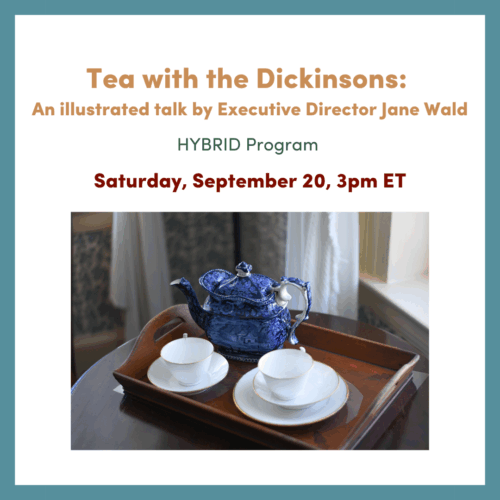 Introduced to the European market in the seventeenth-century, trade in tea – and subsequently in coffee and chocolate – became a means of establishing empires and generating the almost frantic consumerism of the eighteenth and nineteenth centuries in the West. Emily Dickinson and her family delighted in these exotic imported beverages and, like the rest of New England, acquired the requisite material goods to make and serve tea, coffee, and chocolate in their own family circle and for their guests. This talk will explore the meanings, settings, and equipment for “taking tea” in Emily Dickinson’s world, including original family objects now in the Museum’s collection.
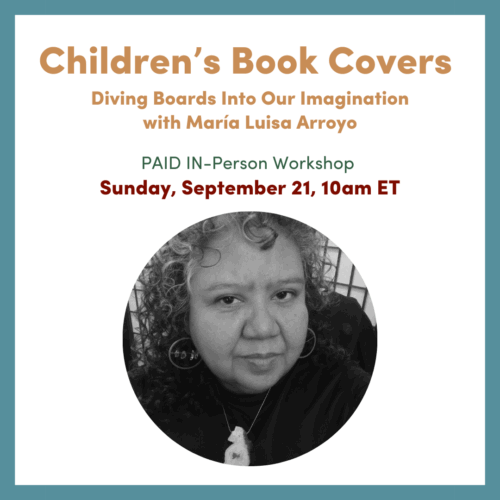 Beginner and experienced poets of all ages are invited to come and use children’s book covers as diving boards into memory and imagination. Children’s books will be on hand to browse, and participants will also be encouraged to search online for their own current or past favorite children’s books. Using one or more of the five senses (sight, sound, touch, smell & taste), participants will generate drafts of new poems as the vivid literary landscape of rhymes, illustration, and stories of childhood spark memories and new ideas.
 In a time of ecological crisis and increased disconnection from nature, poets create vital space to honor and reflect upon the natural world, with its joys and its losses. In this generative workshop led by The WildStory Podcast host Ann E. Wallace and featured guest Elizabeth Sylvia, poetry and nature enthusiasts of all ages and experience levels are invited to slow down and open their senses to the natural world—the memories it holds, the meanings it carries, and the feelings it inspires. Participants will engage in writing exercises, learn new strategies, and compose a poem draft during the session.
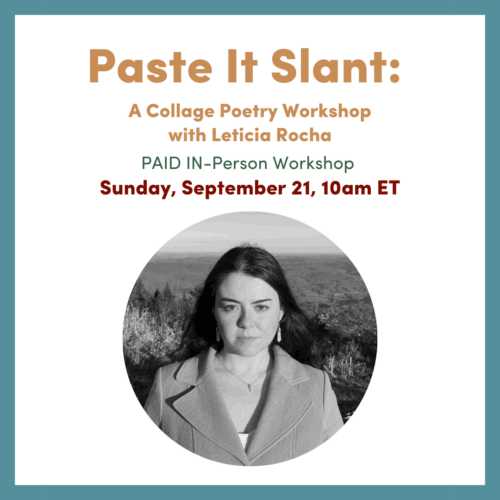 Join us for a generative workshop that pairs the visual art form of collage with poetry! Participants will be guided through a process of discovery with different collaging materials and text to create their own hand-crafted collage. You will walk away with seeds of poems, deeper knowledge and experience with a visual art form, and a found poetry technique to help you — in the immortal words of Emily Dickinson — “tell all the truth but tell it slant “! All levels of experience with poetry and visual art are welcome.
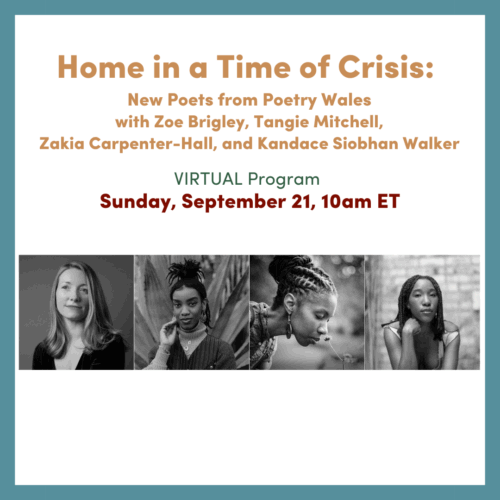 Where do we find home, belonging and comfort in a time of crisis? What might Emily Dickinson tell us about how to find comfort and strength when it sometimes feels like nothing we do can change things for the better? Head editor and chair Zoë Brigley presents three brilliant new editors from the magazine Poetry Wales: Kandace Siobhan Walker, Tangie Mitchell and Zakia Carpenter-Hall. These rising poetry stars will talk about where they find comfort, reading classic poems such as “Hope” is the thing with feathers’ alongside less well known Dickinson poems and their own work.
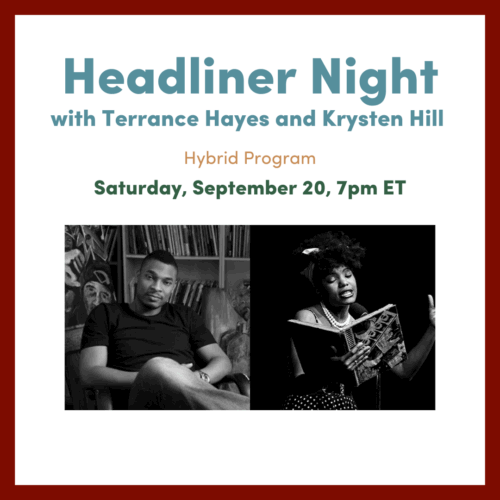 Join us in Emily Dickinson’s garden or virtually for a celebration of creativity and poetry! Our headlining poets, National Book Award and MacArthur Genius grantee Terrance Hayes and award-winning poet Krysten Hill, read from their work and discuss their poetic practice and inspiration with moderator Nicole Callihan.