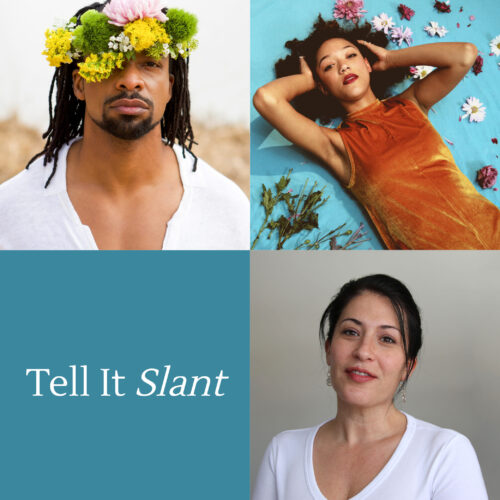
 Settle in for an evening of music and poetry celebrating Emily Dickinson’s ongoing creative legacy with the work of three contemporary artists. Singer-songwriter Kimaya Diggs, brings you new original settings of Dickinson poems live from the poet’s bedroom, and headliners Ada Limón and Jericho Brown read from their work and discuss their poetic practice and inspiration. The evening begins and ends with 20-minute musical sets by Diggs, bookending the headliner poetry reading and Q&A with Brown, Limón, and guest interviewer Nathan McClain. Don’t miss out on this special evening of community through art!
Live captioning will be available at this event!
*A note about Rosh Hashanah: We apologize that this event falls on the occasion of the Jewish New Year. The Festival has historically been scheduled in the third week of September for consistency and to avoid overlap with other local events. This program will be recorded and made available to view for three months following the event itself. Please register to receive information on how to view the recording. Shanah Tovah!
About the artists:
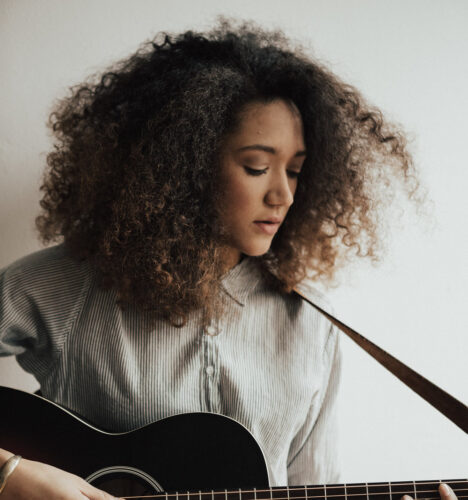
Kimaya Diggs has mastered a genre-defying style. Inspired by the acrobatic folk renderings of Joni Mitchell, Ella Fitzgerald’s jazz stylings, and Lianna LaHavas’ soulful charisma, she draws skillfully from her lineage of musical pioneers, creating a musical lane all her own. With a playful presence and frank, transporting storytelling, Diggs’ mastery of her voice is the focal point of each performance, and a transfixing experience. Information and music at kimayadiggs.com or on instagram at @kimayadiggs.
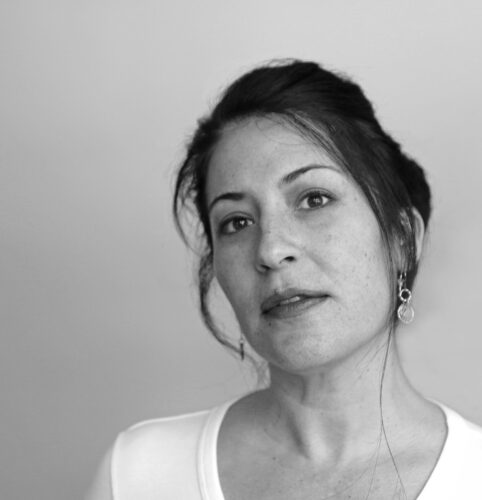 Ada Limón is the author of five books of poetry, including The Carrying (Milkweed Editions, 2018), which won the National Book Critics Circle Award for Poetry and was named one of the top 5 poetry books of the year by the Washington Post. Her fourth book Bright Dead Things was named a finalist for the National Book Award, a finalist for the Kingsley Tufts Poetry Award, and a finalist for the National Book Critics Circle Award. She serves on the faculty of Queens University of Charlotte Low Residency M.F.A program, and the online and summer programs for the Provincetown Fine Arts Work Center. She also works as a freelance writer in Lexington, Kentucky.
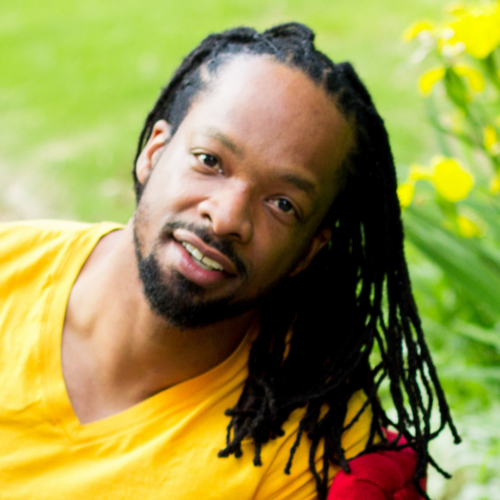 Jericho Brown is the recipient of a Whiting Writers’ Award and fellowships from the John Simon Guggenheim Foundation, the Radcliffe Institute for Advanced Study at Harvard University, and the National Endowment for the Arts. Brown’s first book, Please (2008), won the American Book Award. His second book, The New Testament (2014), won the Anisfield-Wolf Book Award and was named one of the best of the year by Library Journal, Coldfront, and the Academy of American Poets. He is also the author of the collection The Tradition (2019), which was a finalist for the 2019 National Book Award and the winner of the 2020 Pulitzer Prize for Poetry. His poems have appeared in Buzzfeed, The Nation, The New York Times, The New Yorker, The New Republic, TIME magazine, and The Pushcart Prize Anthology, and several volumes of The Best American Poetry anthologies. He is an associate professor and the director of the Creative Writing Program at Emory University in Atlanta.
About the interviewer:
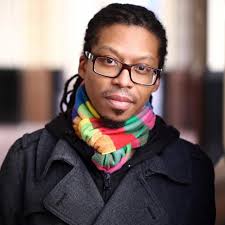 Nathan McClain is the author of Scale (Four Way Books, 2017), a recipient of fellowships from Sewanee Writers’ Conference, The Frost Place, Bread Loaf Writers’ Conference, and a graduate of Warren Wilson’s MFA Program for Writers. His poems and prose have recently appeared or are forthcoming in Poetry Northwest, Green Mountains Review, Poem-a-Day, The Common, and The Critical Flame. He teaches at Hampshire College. For more information visit www.nathanmcclain.com.
Support The Tell It Slant Poetry Festival and Honor Someone Special:
Admission to all Festival events is free, but online donations, especially those made in honor or memory of family, friends, or colleagues are heartily encouraged and vital to the future of this beloved annual event. All gifts are tax deductible and will be recognized as part of the Festival.
2020 Tell It Slant Facebook Video – Festival Headliners Ada Limón and Jericho Brown with Music by Kimaya Diggs
2020 Tell It Slant Schedule
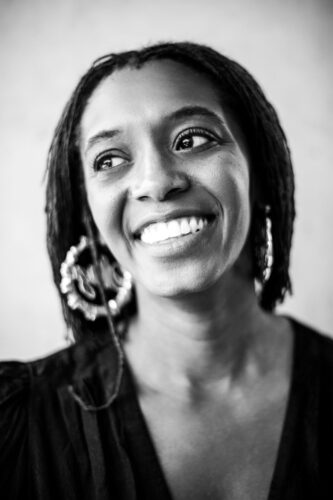 About the poet: Shayla Lawson is the author of three books of poetry—A Speed Education in Human Being, the chapbook Pantone, and I Think I’m Ready to see Frank Ocean—and the essay collection This Is Major: Notes on Diana Ross, Dark Girls, and Being Dope, which Kirkus called “A hilarious, heartbreaking, and endlessly entertaining homage to black women’s resilience and excellence.” She was born in Rochester, Minnesota, grew up in Lexington, Kentucky, studied architecture in Italy, and spent a few years as a Dutch housewife—milkmaid braids and all. She teaches at Amherst College and lives in Brooklyn, NY.

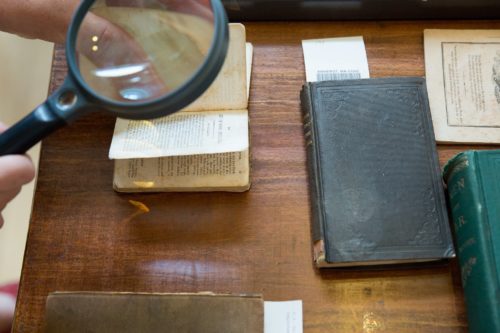


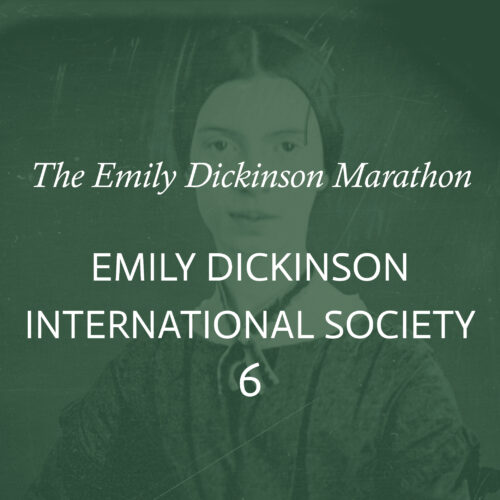 Join us for part 6 of the week-long Emily Dickinson Marathon! An Emily Dickinson Museum tradition, the Marathon is a group reading of all 1,789 poems by Emily Dickinson over the course of about 14 hours. For this year’s remote Festival, we are partnering with six other organizations to host the Marathon in two-hour sessions each day of this week. For the Marathon, we will be reading from Ralph Franklin’s