Phosphorescence June 2025 featured poets:
Barbara Mossberg, Bridget Lowe, and Rachelle Toarmino
VIRTUAL PROGRAM
This virtual program is free to attend and will be streamed live from the Homestead. Registration is required.
REGISTER
To Emily Dickinson, phosphorescence was a divine spark and the illuminating light behind learning — it was volatile, but transformative in nature. Produced by the Emily Dickinson Museum, the Phosphorescence Contemporary Poetry Series celebrates contemporary creativity that echoes Dickinson’s own revolutionary poetic voice. The Series features established and emerging poets whose work and backgrounds represent the diversity of the flourishing contemporary poetry scene. Join us on a Thursday evening each month to hear from poets around the world as they read their work and discuss what poetry and Dickinson mean to them.
About this month’s poets:
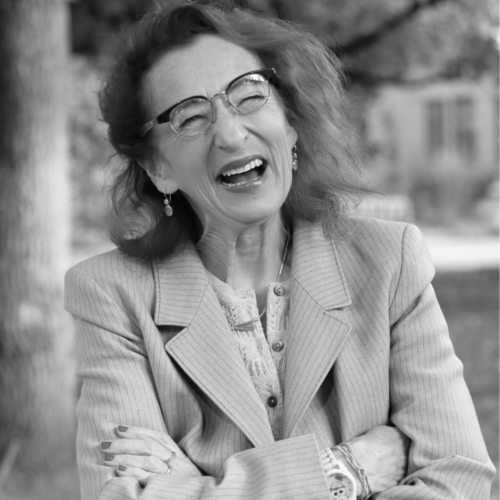
Barbara Mossberg is a wordsy and passionate person who will think your story is just what our world needs, author of just released Clown Cantos: Everything Is Alive In Its Own Way, Singing, and the recent Here for the Present: A Grammar of Happiness in the Present Imperfect, Live from the Poet’s Perch, and Sometimes the Woman in the Mirror Is Not You and other hopeful news postings, Professor Mossberg’s distinguished career of five decades as a prizewinning poet, author, teacher, and honored educational leader, is dedicated to a wildly out-of-the-world optimism and brave faith. Mossberg ascribes to Emily Dickinson’s “I dwell in Possibility”–despite how things seem, it is possible to find the beauty—and hope. President Emerita Goddard College, founding Dean California State University Monterey Bay, Professor of Practice at Clark Honors College, University of Oregon, former National Council of Research on Women Senior Fellow, and American Council on Education Senior Fellow, Mossberg uses her public platforms to promote the power of words in each of our lives and human fates. She has been recognized by National Endowment for the Humanities, American Council of Learned Societies, Mellon Foundation (Aspen Institute) and others, twice named the Senior Fulbright Distinguished Lecturer, and a current Fulbright Specialist. At the University of Oregon, she has been awarded the Clark Honors College Faculty Innovation Fellowship, and the University’s highest teaching honors, the Williams Fellowship, and Ersted Award, as well as is nominated for the national teaching Cherry Award at Baylor University.
Barbaramossberg.com
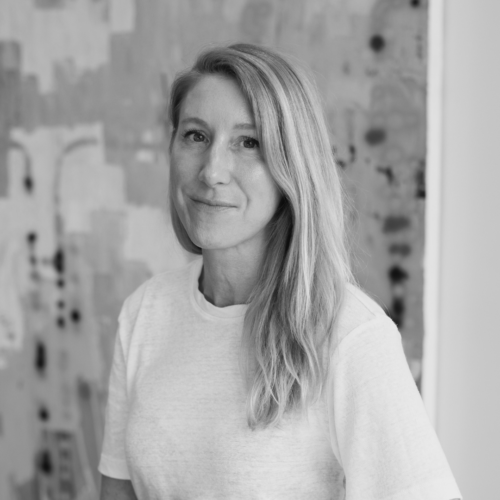
Bridget Lowe is an American poet. In an early interview, Lowe expressed her interest in and commitment to “figures who are rejected by the same social groups for which they are expected to perform.” The Poetry Foundation elaborates “Her poetry is accordingly concerned with those who feel they are both looked at and invisible, who are exploited yet remain deeply unknown.” / Bridget Lowe was born in Kansas City, Missouri. She is the author of two collections of poetry with Carnegie Mellon University Press: At the Autopsy of Vaslav Nijinsky in 2013, followed by My Second Work in 2020. Her work has appeared in numerous publications including multiple times in The New Yorker, Poetry, The New Republic, Parnassus, and the American Poetry Review. Her work has also appeared in the Best American Poetry anthology. Her honors include the Emily Dickinson Award from the Poetry Society of America, the Discovery/92NY Poetry Award, a fellowship to the Bread Loaf Writers’ Conference, and the Rona Jaffe Foundation fellowship to MacDowell for an extended residency.
bridgetlowe.com
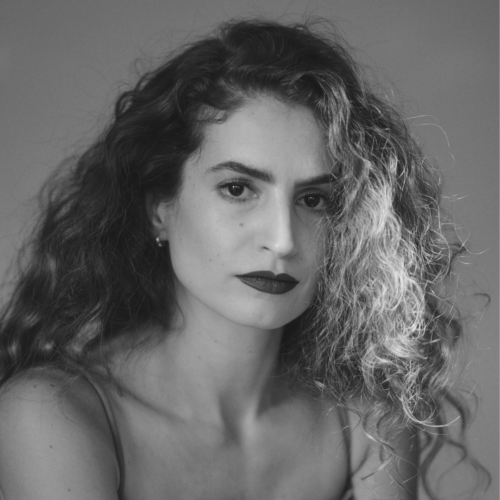 Rachelle Toarmino is a poet from Niagara Falls, New York. She is the author of the poetry collections Hell Yeah (Third Man Books, 2025) and That Ex (Big Lucks Books, 2020), as well as several chapbooks, most recently My Science (Sixth Finch Books, 2025), winner of the 2024 Sixth Finch Chapbook Contest. Her work has appeared in Poets.org, Literary Hub, Electric Literature, American Poetry Review, Bennington Review, Southeast Review, The Slowdown, and Omnidawn, which awarded her its 2024 Single Poem Broadside Prize. She earned her MFA in poetry at UMass Amherst, where she received an Academy of American Poets Prize. She is also the founding editor-in-chief of the literary publishing project Peach Mag and the creator and lead instructor of Beauty School, an independent poetry school. She lives in Buffalo.
rachelletoarmino.com
Support Phosphorescence and Honor Someone Special:
Admission to all Phosphorescence events is free, but online donations, especially those made in honor or memory of family, friends, or colleagues are heartily encouraged and vital to the future of our programs. All gifts are tax-deductible.

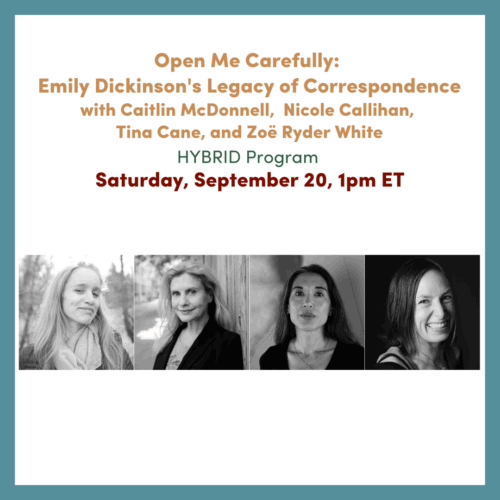 Emily Dickinson is known to have written more than a thousand intimate and poetic letters in her lifetime. What fueled these correspondences, and how did these correspondences fuel Dickinson’s creative mind? In this workshop, poets Nicole Callihan, Tina Cane, Caitlin Grace McDonnell, and Zoë Ryder White will discuss the necessity and ascendancy of correspondence in their own lives and work. Panelists will consider poetry’s deep intersection of private world and public sphere, and then ask participants to do the same as they pen their own letter-poems. This generative writing—if Nerve not be denied!—will be shared.
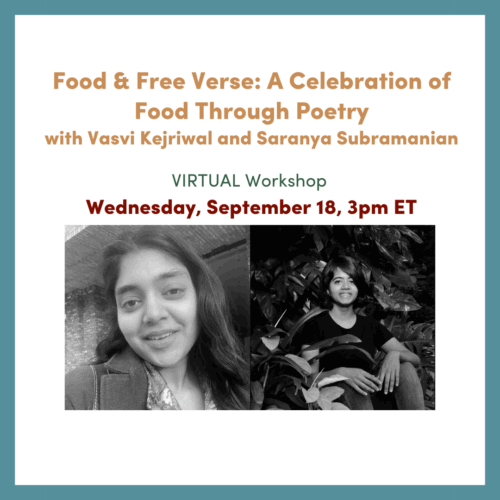 This is a unique poetry generative writing workshop for writers of all levels. We will meditate on different ways to perceive the way food nourishes the soul, just like a poem does: through memory and survival, through gratitude, through synesthesia, through love languages and through socio-economic commentary. Join us and leave with at least one solid poem draft!
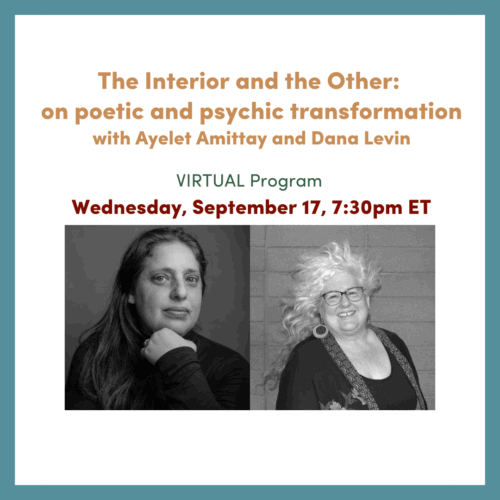 What can poetry teach us about psychoanalysis, and the process of sharing one’s inner self with another? What can therapeutic or healing work teach us about writing poems? In this panel, two poets who have written about and undergone forms of therapy will explore the art and practice of writing about interiority and healing. We will read Emily Dickinson, Louise Gluck, and each presenter’s work, and explore the intersections between them.
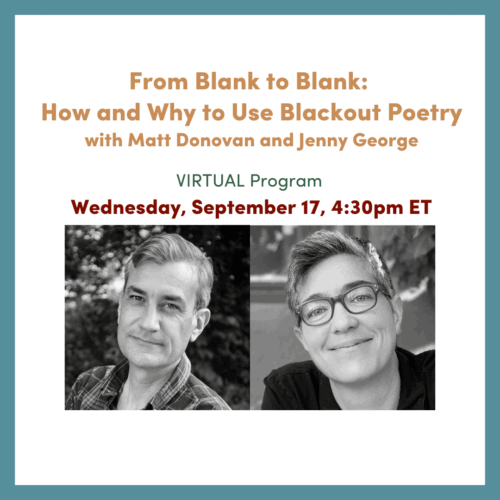 What do acts of erasure afford a writer? How can blackout poetry be used to create community, unlock writer’s block, or clap back? The reasons for engaging in an erasure of a text can range from playful engagements with the literary canon, to political reclamations of voice and language. In this interactive workshop, we’ll be looking closely at resonant models of erasure (including Nicole Sealey, Sarah Sloat, Tracy K. Smith, and Jennifer Sperry Steinorth), and exploring the effects of different blackout poetry strategies. Participants will leave the workshop with prompts, tools of erasure, and recommended readings. Featuring Matt Donovan and Jenny George, authors of We Are Not Where We Are: an erasing of Thoreau’s Walden (Bull City Press, 2025).
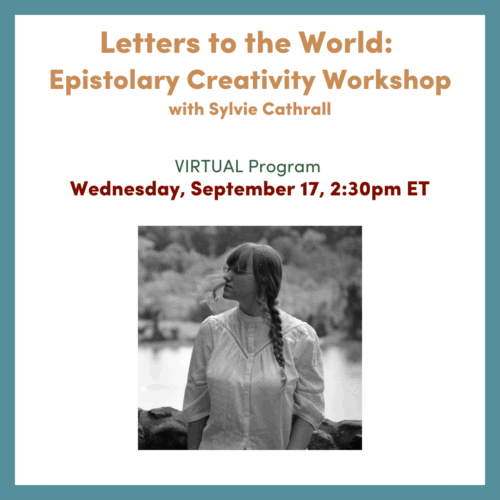 Follow Emily Dickinson’s example by writing letters “to the World” in a virtual workshop with epistolary fantasy author Sylvie Cathrall. In this gentle and good-humored writing program, participants will play with letter-writing as a form of poetic and personal expression while drawing inspiration from Dickinson’s own letters. Guided freewriting sessions will be followed by opportunities for sharing and reflection. No experience necessary – open to all writers (and sometimes-writers, first-time-writers, letter-writers, and everyone else, too!).
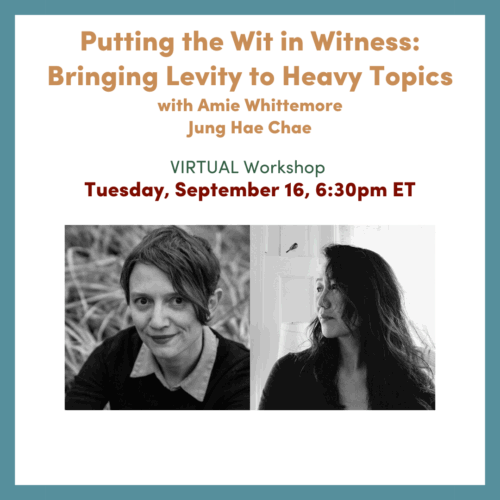 In Dickinson, we meet a speaker who sees Death as a kindly chauffeur and notes the flies buzzing around their deathbed. In these and other remarkable poems, Dickinson upends the heaviness of confronting our own mortality. She situates the speaker as a witness whose playfulness, wit, and sarcasm defuses the volatility of the moment – and helps renew the reader’s perspective. In this generative workshop, we turn to Dickinson and other contemporary poets who use a light hand to address tough subjects. Through readings and interactive writing exercises, participants will explore the power of this approach to inspire their own writing.
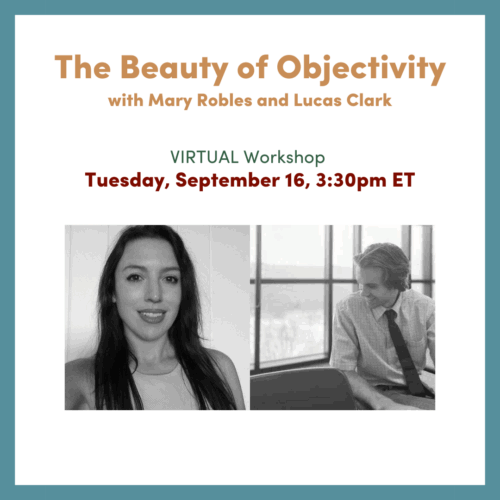 This workshop provides beginning poets with a framework for analyzing poetry with an objective approach centered on craft elements. With an eye toward formalism, this workshop centers on a streamlined infographic to help writers objectively analyze and discuss any poem — from ancient to contemporary — at the level of craft and technique. Participants will analyze Dickinson’s poems and contemporary examples, and they will generate and analyze their own poetry in response to Dickinson-centered prompts. The key focus of this workshop is for writers to view any poem objectively and ask not: “Is this poem good or bad?” but “What is this poem doing?”.

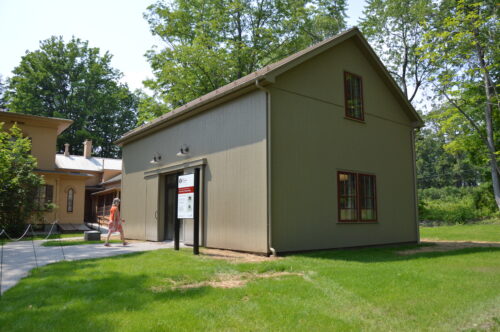 The Carriage House achieves this through five core principles:
 “
“